
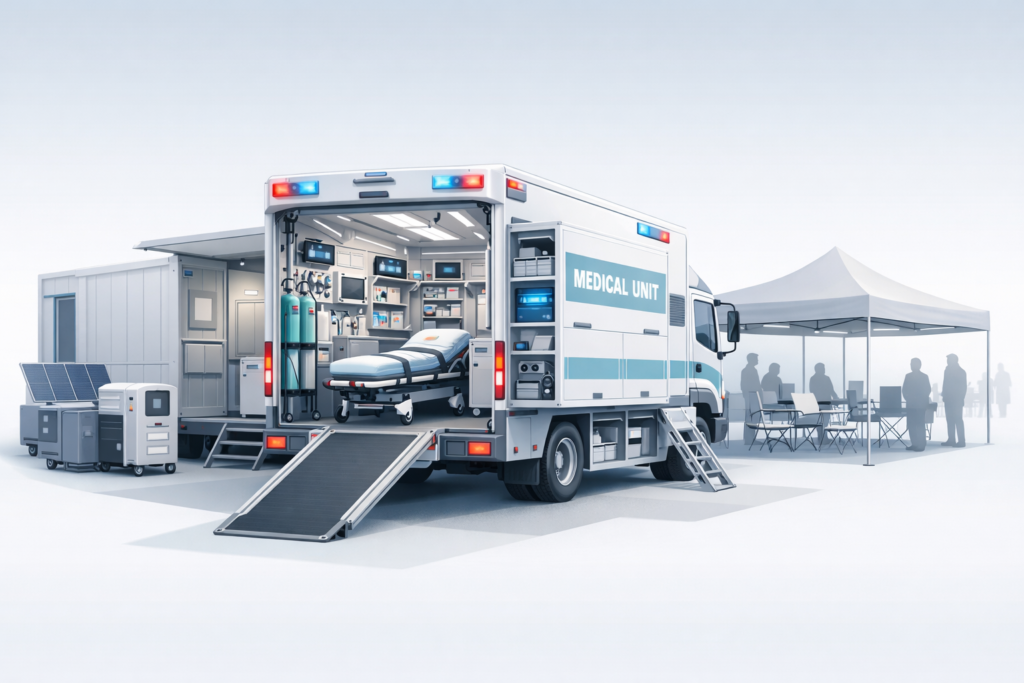
Ambulance trucks give hospitals, public agencies, NGOs, and emergency response organizations a practical way to extend medical transport and mobile care capacity beyond a fixed facility. Their larger body options, adaptable interiors, and equipment integration potential make them suitable for urban response, remote regions, disaster relief, industrial sites, and planned medical operations.
Choosing an ambulance truck involves more than selecting a vehicle platform. Buyers need to evaluate patient transport requirements, crew workflow, road conditions, climate, electrical capacity, storage, maintenance support, and local regulations. A compact Mercedes-Benz Sprinter conversion may suit rapid urban deployment, while a box-type ambulance may offer additional interior volume for demanding operational layouts. This guide explains the main features, applications, and custom options that international buyers should consider when planning an ambulance truck project with EOW Global.
What features define a modern ambulance truck?
A modern ambulance truck combines a suitable commercial vehicle platform with a purpose-built medical interior, integrated electrical systems, exterior warning equipment, and a layout shaped around crew and patient movement.
The vehicle platform determines much of the ambulance’s operating character. Wheelbase, gross vehicle weight, engine configuration, transmission, ground clearance, and body dimensions influence where the vehicle can operate and how much equipment it can carry. A compact van-based ambulance can navigate dense city streets and narrow hospital entrances, while a larger box-body vehicle can provide more standing room, storage, and workspace.
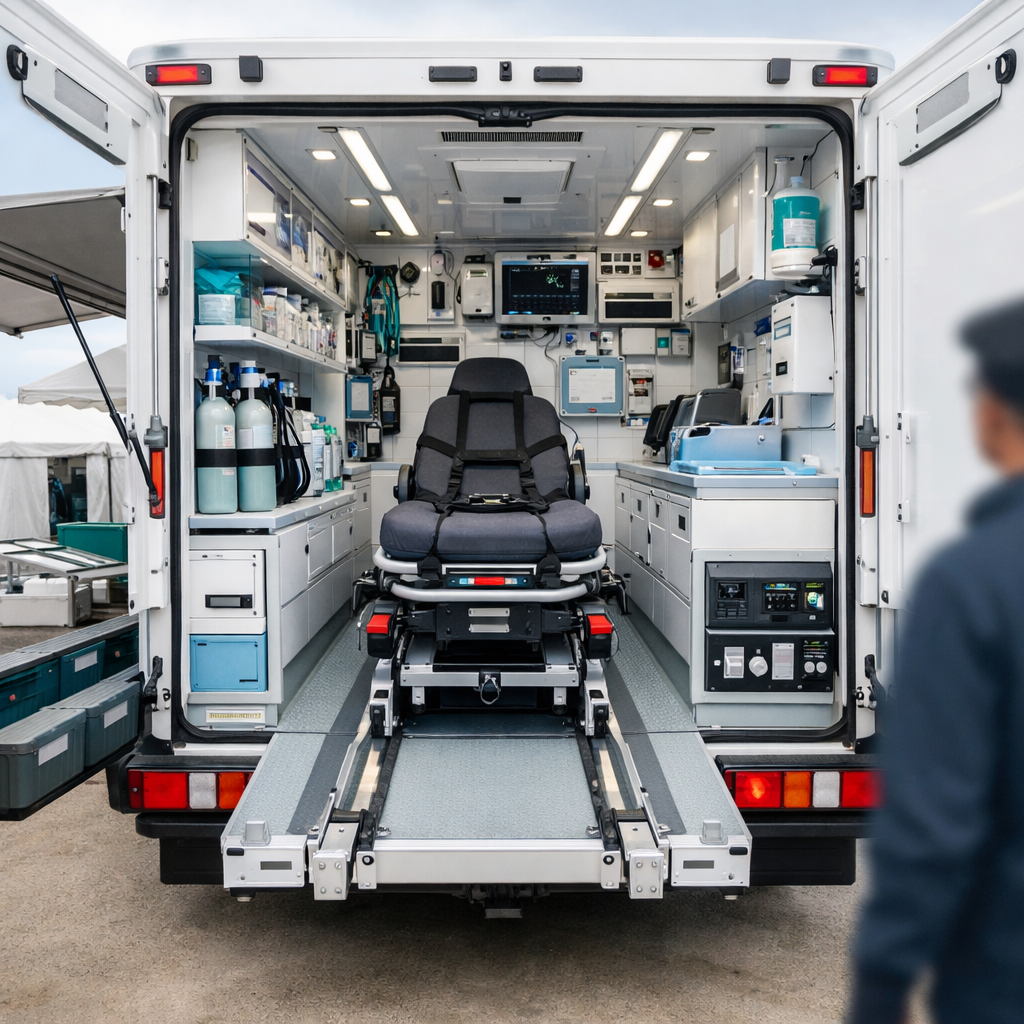
The patient compartment should support an orderly workflow. Typical elements include a stretcher position, attendant seating, interior grab handles, medical equipment cabinets, oxygen storage provisions, work surfaces, lighting, and secure mounting points. EOW Global can configure these elements around the buyer’s operational model rather than applying one identical layout to every project. For example, a hospital fleet may prioritize fast patient loading and standardized equipment placement, while an NGO operating in remote areas may need additional storage and durable, easy-to-clean surfaces.
Electrical design also plays a central role. Ambulance trucks may require auxiliary batteries, shore power connections, inverters, interior LED lighting, external power outlets, and charging points for portable equipment. The final configuration depends on the selected devices and the intended duty cycle. Buyers should define which systems must operate while the vehicle is stationary, which devices require continuous power, and how crews will recharge equipment between missions.
Climate and working conditions shape the interior specification as well. Air-conditioning and heating capacity, insulation, ventilation, window treatment, and materials all affect the crew’s day-to-day experience. A vehicle assigned to hot regions may need a stronger cooling strategy, whereas operations in colder climates may place greater emphasis on insulation and auxiliary heating. By addressing these factors during the design phase, organizations can create a vehicle that matches its deployment environment.
Which ambulance truck configuration suits your operation?
The right configuration depends on patient volume, crew size, route conditions, equipment needs, and whether the vehicle will focus on transport, emergency response, or mobile healthcare delivery.
For many international buyers, a Mercedes-Benz Sprinter ambulance offers a balanced starting point. Its van format supports a relatively compact external footprint while providing room for a structured patient compartment and essential medical equipment. This option can work well for hospital transfer fleets, municipal emergency services, private healthcare networks, and organizations that need a versatile vehicle for mixed urban and interurban routes. Explore the Mercedes Sprinter ambulance manufacturer solution from EOW Global to review one example of this vehicle category.
A box-type ambulance takes a different approach. Its separate body structure can create more usable interior volume and greater freedom when positioning cabinets, seating, stretchers, and technical systems. That additional space can support larger crews, specialized equipment, extended transport tasks, or a mobile clinic layout. Organizations comparing vehicle options can review the Mercedes Sprinter box-type ambulance when a box-body design better matches their workflow.
Consider a regional health authority planning a fleet of 12 vehicles for a mixed geography. Six units may operate in a dense metropolitan area, where maneuverability and rapid loading matter most. Four vehicles may cover highways and suburban districts, requiring balanced passenger capacity, storage, and long-distance comfort. The remaining two units may support temporary medical stations during public events or emergency campaigns, making modular storage and additional interior workspace more valuable. One standardized vehicle would not necessarily serve all three roles equally well, so a fleet strategy can combine related configurations while keeping training and maintenance manageable.
Route conditions deserve the same attention as interior dimensions. Paved roads, gravel tracks, steep gradients, high temperatures, dust, humidity, and seasonal flooding can affect the platform and equipment specification. Buyers should also consider the availability of replacement parts, local service expertise, fuel quality, and workshop capacity. A technically capable vehicle becomes more practical when the operating organization can maintain it efficiently in the countries where it will work.
Organizations that expect frequent transfers between hospitals may focus on stretcher access, crew seating, storage discipline, and patient-compartment comfort. Emergency response teams may give more attention to exterior visibility, communications integration, rapid equipment access, and all-weather operation. Mobile health providers may need fold-out workstations, refrigeration provisions, privacy features, and additional power capacity. Defining the mission first makes the vehicle selection process clearer.
How can an ambulance truck be customized?
Ambulance truck customization can cover the vehicle platform, interior layout, medical equipment mounts, electrical architecture, exterior identity, communications provisions, and regional delivery requirements.
Interior customization begins with the work pattern of the crew. Cabinet height, drawer placement, stretcher orientation, attendant seating, and equipment access points can determine how efficiently a team moves inside the compartment. EOW Global can help buyers plan these details around the equipment they already use or intend to procure. That approach reduces the risk of receiving a vehicle with attractive features but limited compatibility with the organization’s actual inventory.
Storage deserves particular attention because ambulance equipment varies widely between markets and mission types. A basic patient transport vehicle may need organized storage for routine supplies and monitoring devices. A response vehicle may require additional space for trauma equipment, personal protective equipment, communication units, and portable power systems. A mobile healthcare vehicle may need dedicated cabinets, counters, privacy partitions, or specialized refrigeration provisions. Clear labeling, secure closures, and accessible compartments help crews maintain a consistent workflow.
Seating and stretcher systems can also follow different operational priorities. Buyers may select fixed or adjustable attendant seats, folding seats, bench configurations, or layouts that preserve a wider passage. Stretcher loading height, rear-door clearance, ramp or step arrangements, and internal restraint points should match the selected stretcher system and the vehicle’s intended loading environment. These details matter especially when crews work in narrow streets, uneven ground, or crowded event areas.
Exterior customization supports recognition, fleet management, and operational visibility. Depending on local requirements, a project may include high-visibility graphics, reflective markings, emergency lighting, sirens, side steps, roof equipment, protective bumpers, and organization branding. Buyers should coordinate the exterior design with local road regulations and fleet standards. A consistent appearance can also help public agencies and NGOs manage vehicles across several regions.
Communications and control systems create another layer of customization. Some organizations may require radio preparation, antenna provisions, GPS fleet tracking, intercoms, or dedicated control panels. Others may need additional USB charging points, 12-volt or 24-volt outlets, shore power, or a generator interface. The design should identify the power draw of every major device and leave enough access for inspection and service.
Documentation and delivery preparation are equally important for international projects. Buyers may request technical drawings, equipment lists, user manuals, service documentation, conformity information, and training materials. Vehicle registration, import procedures, language requirements, and destination-country standards can influence the project timeline. Working through these requirements early allows EOW Global and the customer to align the build with the receiving organization’s procurement process.
What should international buyers check before ordering?
International buyers should confirm the vehicle mission, local compliance requirements, equipment list, service plan, delivery conditions, and total project scope before approving production.
Start with a written operational brief. Include the number of crew members, patient transport type, expected daily mileage, terrain, climate, storage requirements, preferred chassis, medical devices, and anticipated fleet size. A short brief can prevent major specification gaps later, particularly when several departments participate in the purchase.
Next, separate essential requirements from preferred options. For example, auxiliary power and stretcher compatibility may be essential, while a particular cabinet finish or additional exterior accessory may remain optional. This distinction helps procurement teams compare quotations accurately and keeps the project focused on operational value.
Ask for a clear technical configuration that identifies the chassis, body type, interior materials, electrical systems, lighting, seating, storage, warning equipment, and included accessories. If the project includes medical equipment, confirm whether the buyer supplies those devices or expects the vehicle manufacturer to integrate them. Dimensions and mounting points should match the final equipment list rather than an early estimate.
Service planning should cover preventive maintenance, warranty communication, spare parts, technician training, and local support arrangements. A fleet may operate for years across several regions, so the purchase decision should account for more than the initial vehicle price. It should also consider fuel consumption, consumable replacement, inspection access, and the organization’s ability to keep vehicles available.
For a broader view of how ambulance services fit into emergency care systems, buyers can consult the Wikipedia overview of ambulance vehicles and services as a general reference point. The final specification, however, should always reflect the destination country’s applicable rules and the purchasing organization’s own operating procedures.
Frequently Asked Questions About Ambulance Trucks
What is an ambulance truck used for?
An ambulance truck transports patients, supports emergency response teams, or provides a mobile healthcare workspace, depending on its platform, interior design, and equipment configuration. Organizations use these vehicles for hospital transfers, public events, remote-area access, disaster response, industrial sites, and planned healthcare programs.
What is the difference between a van-type and box-type ambulance?
A van-type ambulance uses the original vehicle body and generally offers a compact footprint, while a box-type ambulance uses a separate rear body that can provide more interior volume and layout flexibility. The better choice depends on route access, crew workflow, equipment, and mission duration.
Can EOW Global customize an ambulance truck for different countries?
EOW Global can develop ambulance configurations around the customer’s vehicle platform, interior plan, equipment requirements, branding, electrical needs, and delivery destination. Buyers should share local regulations, fleet standards, and technical requirements early so the project can align with the intended market.
How does the right ambulance truck support long-term operations?
The right ambulance truck supports long-term operations by matching the vehicle platform, interior workflow, equipment capacity, maintenance plan, and regional requirements to the organization’s actual mission.
A well-planned vehicle does not rely on a single impressive feature. Its value comes from how the chassis, body, storage, electrical systems, seating, stretcher access, visibility equipment, and service strategy work together during everyday use. That is why EOW Global approaches ambulance projects as configurable solutions rather than one-size-fits-all products.
Whether the requirement involves a compact Mercedes Sprinter emergency ambulance, a more spacious box-type configuration, or a mixed fleet for different operating environments, the design process should begin with practical questions: where will the vehicle operate, who will use it, what equipment must it carry, and how will the organization maintain it? Clear answers create a stronger foundation for procurement, customization, and international deployment.
For organizations investing in mobile healthcare capacity, an ambulance truck can become more than a transport vehicle. With the right specification, it can form a consistent, serviceable, and adaptable part of a broader emergency response or mobile medical strategy.