
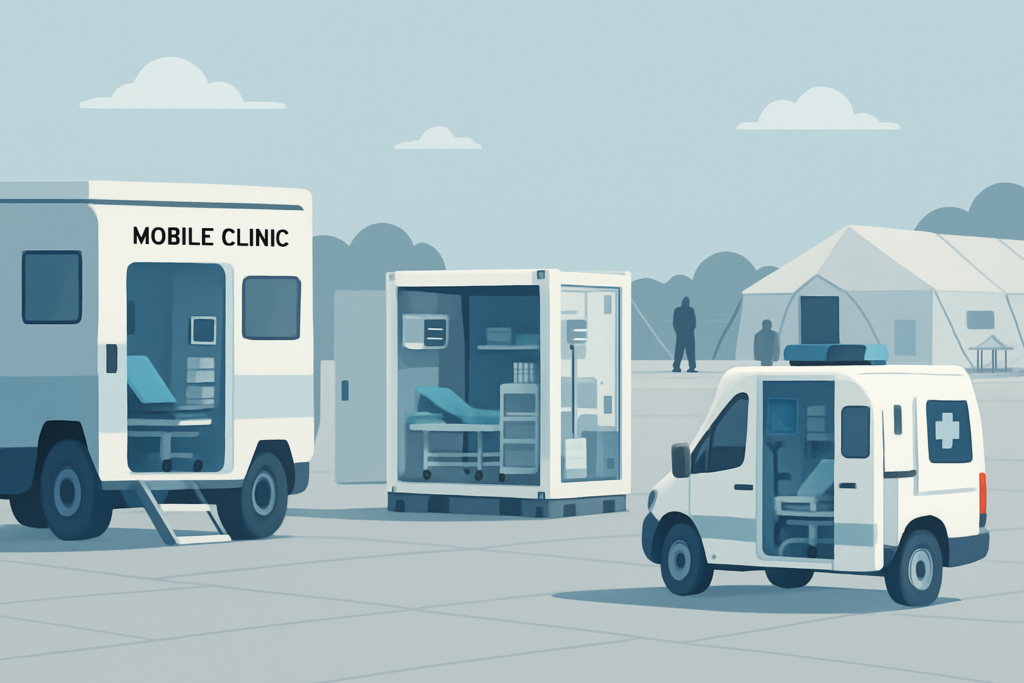
When teams search for “eow military,” they are often looking for more than a vehicle or a prefabricated room. They need a mobile healthcare platform that can move with an operation, adapt to different environments, and support organized clinical workflows wherever permanent infrastructure is limited. EOW Global designs mobile clinics and containerized healthcare units for hospitals, public institutions, NGOs, emergency response organizations, and international partners planning scalable healthcare investments.
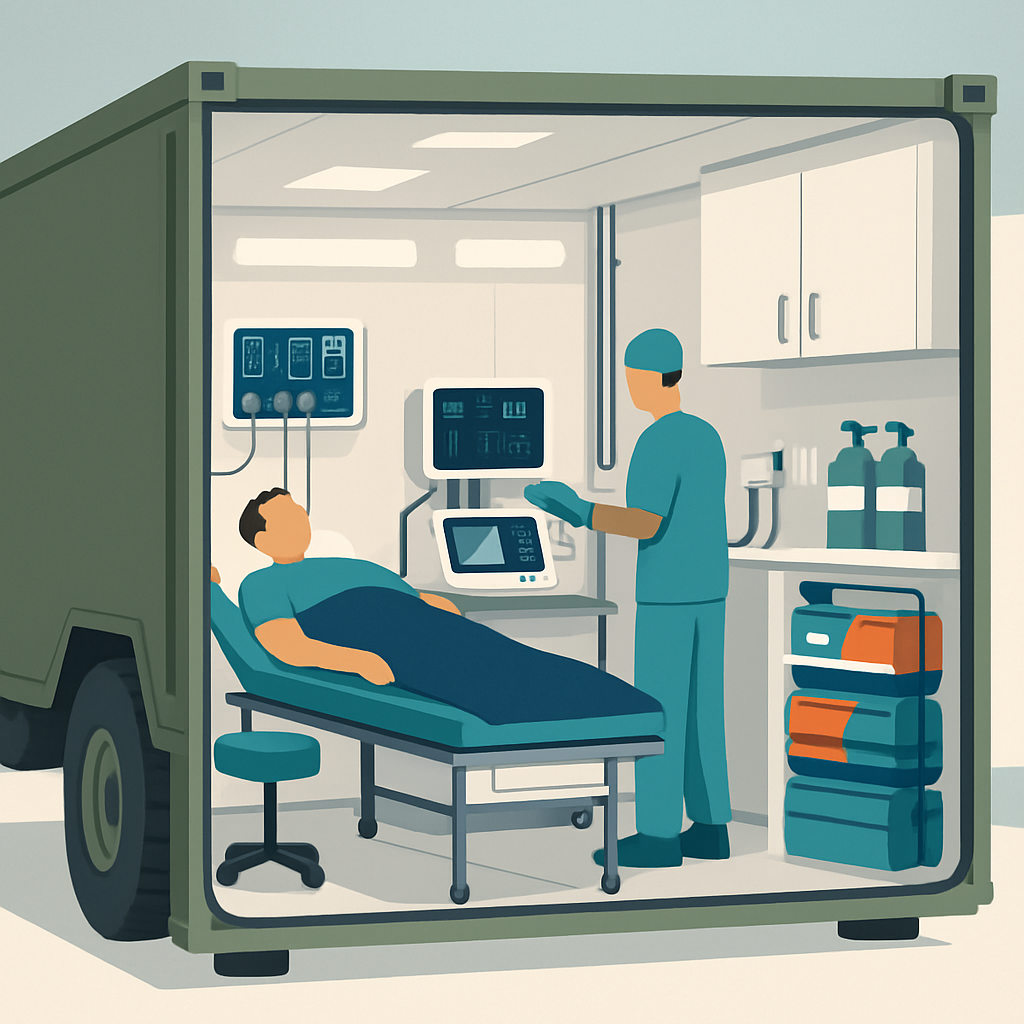
Mission readiness depends on practical details: how quickly a unit can reach a location, how efficiently staff can use the interior, how easily the configuration can change, and how reliably the system can operate across different regions. EOW military solutions address these requirements through purpose-built vehicle and container platforms that combine mobility, functional zoning, technical integration, and project-level customization.
Mobile Healthcare Infrastructure for Operational Environments
A military or emergency healthcare program rarely operates under standard hospital conditions. Teams may work across remote regions, temporary settlements, border areas, disaster zones, or locations where a permanent clinic does not yet exist. In these settings, transportation, installation, staffing, utilities, and patient flow all influence the success of a healthcare deployment.
EOW Global approaches the mobile clinic as an integrated working environment rather than a simple transport solution. The vehicle or container becomes a structured clinical space with designated areas for examination, imaging, consultation, storage, staff movement, and patient access. This structure helps organizations plan their operations before the unit reaches the field and gives medical teams a clearer environment in which to work.
Mobility creates a practical advantage for institutions that serve changing populations. Instead of linking healthcare access to one fixed building, an organization can move a clinic between operational zones according to demand. A unit may support a scheduled community program one week, then relocate to a temporary response area or another regional facility when priorities change. The exact deployment model depends on the commissioning organization, local regulations, available infrastructure, and clinical scope.
For organizations planning care in complex environments, this approach also supports phased investment. A project can begin with a focused service such as screening, consultation, or diagnostic imaging, then expand through additional units or complementary modules. EOW Global works with clients to align the interior layout, equipment package, power requirements, storage capacity, access points, and exterior design with the intended mission.
Configurable Units for Different Healthcare Missions
Every mobile healthcare project has a different operating brief. A hospital may require a specialist outreach unit that complements its main campus. An NGO may need a compact clinic that can serve several locations. A public institution may prioritize a recognizable mobile service for regional screening. An emergency organization may need a rapidly deployable facility with a clear patient route and robust technical infrastructure.
That is why customization plays a central role in EOW Global projects. The team can shape the unit around the service model instead of forcing the service model into a generic interior. Configuration decisions may include the number and type of consultation rooms, examination areas, imaging spaces, waiting zones, staff areas, accessibility features, storage solutions, medical gas planning, electrical systems, HVAC requirements, and external access arrangements.
Consider a regional screening program serving three districts. The organization may schedule one mobile mammography unit in District A on Monday and Tuesday, move it to District B on Wednesday, and complete the week in District C. In this scenario, the project team must consider not only the imaging room but also patient registration, privacy, staff workflow, equipment transport, parking conditions, power availability, and appointment scheduling. A well-planned mobile platform brings these operational details together in one coherent design.
For breast screening projects, organizations can review the Mobile Mammography Clinic Truck as an example of a vehicle-based configuration. For women’s health services, the Mobile Gynecology Clinic Truck offers another project direction, while a fixed-site deployment that still benefits from modular construction may use a Mobile Gynecology Container Unit.
These examples show how a project can follow the mission rather than a single product template. A truck can support movement between locations, while a container unit can provide a modular room within a prepared compound, hospital campus, field base, or humanitarian coordination site. Organizations can compare these formats according to road access, local construction capacity, deployment frequency, utility connections, security requirements, and long-term expansion plans.
Designed Around Workflow, Integration, and Global Deployment
Mobility alone does not create an effective healthcare environment. The interior must also help staff move through their work logically. Patient entry, registration, consultation, examination, imaging, cleaning, storage, and exit should fit the intended service sequence. Clear zoning reduces unnecessary movement inside the unit and helps the commissioning organization define responsibilities for clinical and support teams.
EOW Global develops each project with technical coordination in mind. That coordination can cover the vehicle or container structure, interior surfaces, lighting, climate control, electrical distribution, water systems, data connections, equipment placement, furniture, access ramps, and external branding. The final scope depends on the selected service and the client’s technical specification, but the objective remains consistent: create a usable healthcare workspace that supports the people operating it.
Global deployment adds another layer of planning. A unit designed for one country may encounter different road conditions, climate patterns, voltage standards, import procedures, language requirements, and service expectations in another. International clients therefore need a project partner that can discuss the unit not only as a finished product, but also as part of a wider delivery process involving documentation, logistics, local coordination, installation, and handover.
Climate is a practical example. A mobile clinic working in a hot region may require a different approach to insulation, cooling capacity, shading, exterior materials, and staff comfort than a unit operating in a cold climate. Likewise, a vehicle deployed on unpaved roads may require different transport and maintenance planning from one serving urban hospitals. EOW Global can review these project conditions during the design stage so the configuration reflects the intended operating environment.
Operational planning should also include maintenance access and future adaptation. Healthcare programs change as funding cycles, population needs, and institutional priorities change. A unit that supports one service today may later need additional equipment, revised storage, new digital systems, or a different patient flow. A modular approach gives organizations more options when they plan future upgrades, relocations, or additional units.
Mobile care also works best when it connects to the wider health system. Referral routes, appointment management, reporting, staff scheduling, data governance, and supply planning remain the responsibility of the operating organization. International frameworks such as primary health care emphasize the value of accessible, coordinated services; a mobile unit can become one practical component within that broader network when the organization defines its role clearly.
Why EOW Global Supports Mission-Oriented Projects
EOW Global brings together vehicle-based clinics, container units, and specialized mobile healthcare concepts for organizations that need a solution shaped around a real deployment plan. The company’s role begins with understanding the service: who will operate the unit, who will use it, where it will travel or be installed, which equipment it must accommodate, and how the organization expects to scale the program.
This project-based approach helps clients move from a general idea to a more precise technical brief. A hospital may start by asking for a mobile gynecology clinic, but the final design also needs to define room functions, equipment dimensions, patient privacy, staff circulation, accessibility, utility connections, and cleaning requirements. A public agency may request a screening vehicle, yet the project still depends on route planning, appointment capacity, parking conditions, local service support, and the expected number of daily visits.
For military, civil protection, and humanitarian stakeholders, the same principle applies. Mission readiness does not come from one universal configuration. It comes from matching the platform to the operational scenario. That scenario may involve short-term deployment, repeated regional movement, integration with an existing hospital, or installation in a compound where a container-based unit provides a dedicated clinical space.
Product selection should therefore begin with questions that are specific to the mission:
- Will the unit travel daily, periodically, or only during planned campaigns?
- Which clinical services and equipment must the interior support?
- What patient capacity does the organization expect per shift or per day?
- Which utilities and digital systems are available at the deployment location?
- What climate, road, access, security, and maintenance conditions will shape the design?
- Does the organization need a truck, a container unit, or a combination of both?
Clear answers make the next stage more productive. They help EOW Global define a configuration that balances clinical function, transport requirements, installation conditions, project budget, and future use. As a result, the client receives a more relevant starting point for procurement, stakeholder review, and implementation planning.
Frequently Asked Questions
What does “EOW military” refer to?
“EOW military” is a search phrase associated with EOW Global’s mobile and modular healthcare solutions for operational environments. It can refer to vehicle-based clinics, containerized units, and customized healthcare platforms considered by military, public-sector, humanitarian, or emergency response organizations.
Can EOW Global customize a mobile clinic for a specific mission?
Yes. EOW Global can develop the configuration around the intended service, equipment, patient flow, staff workflow, transport conditions, climate, utilities, access requirements, and branding. The final scope depends on the project brief and technical specifications.
Should an organization choose a clinic truck or a container unit?
A clinic truck suits programs that require regular movement between locations, while a container unit may suit a prepared site, compound, hospital campus, or modular healthcare facility. Organizations can compare mobility, infrastructure, road access, deployment frequency, and future expansion before selecting the format.
The strongest mobile healthcare projects begin with a clear operational question: where must care take place, which service must the unit support, and how will teams use it day after day? EOW Global turns those answers into configurable clinic trucks and containerized healthcare spaces that connect mobility with practical clinical workflow. For organizations planning healthcare delivery across changing locations, that combination provides a structured path from mission requirement to deployable infrastructure.