
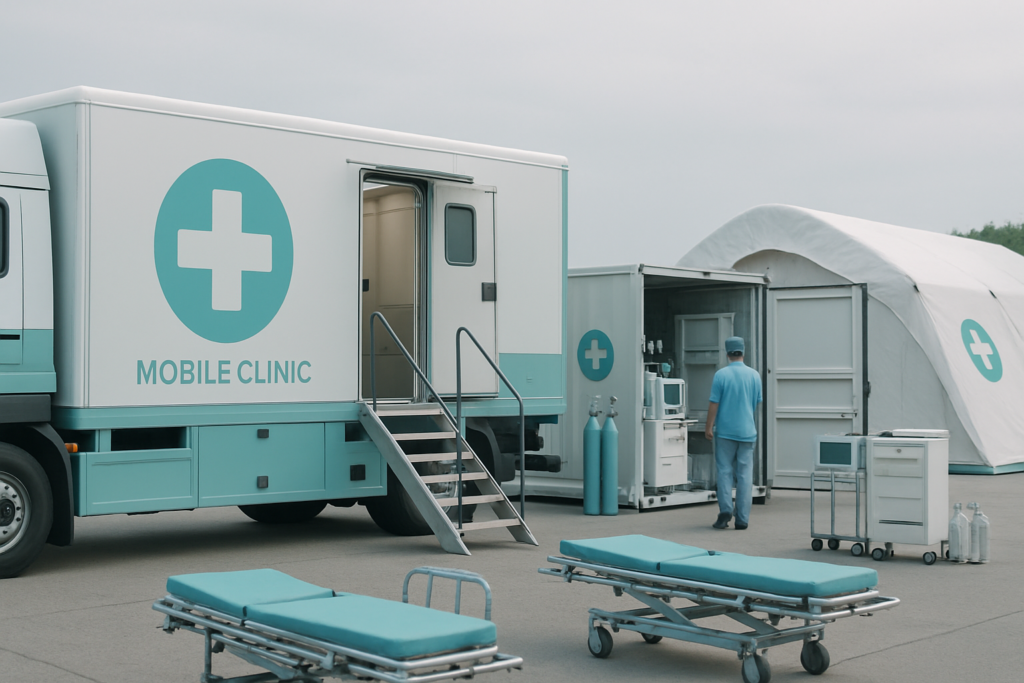
Specialty healthcare vehicles extend medical services beyond the walls of a hospital. They support emergency response teams, public authorities, humanitarian organizations, and healthcare providers that need adaptable clinical capacity in changing environments. From advanced ambulance platforms to mobile clinics, diagnostic units, vaccination vehicles, and disaster-response vehicles, the design must connect medical functionality with reliable mobility, crew ergonomics, and operational readiness.
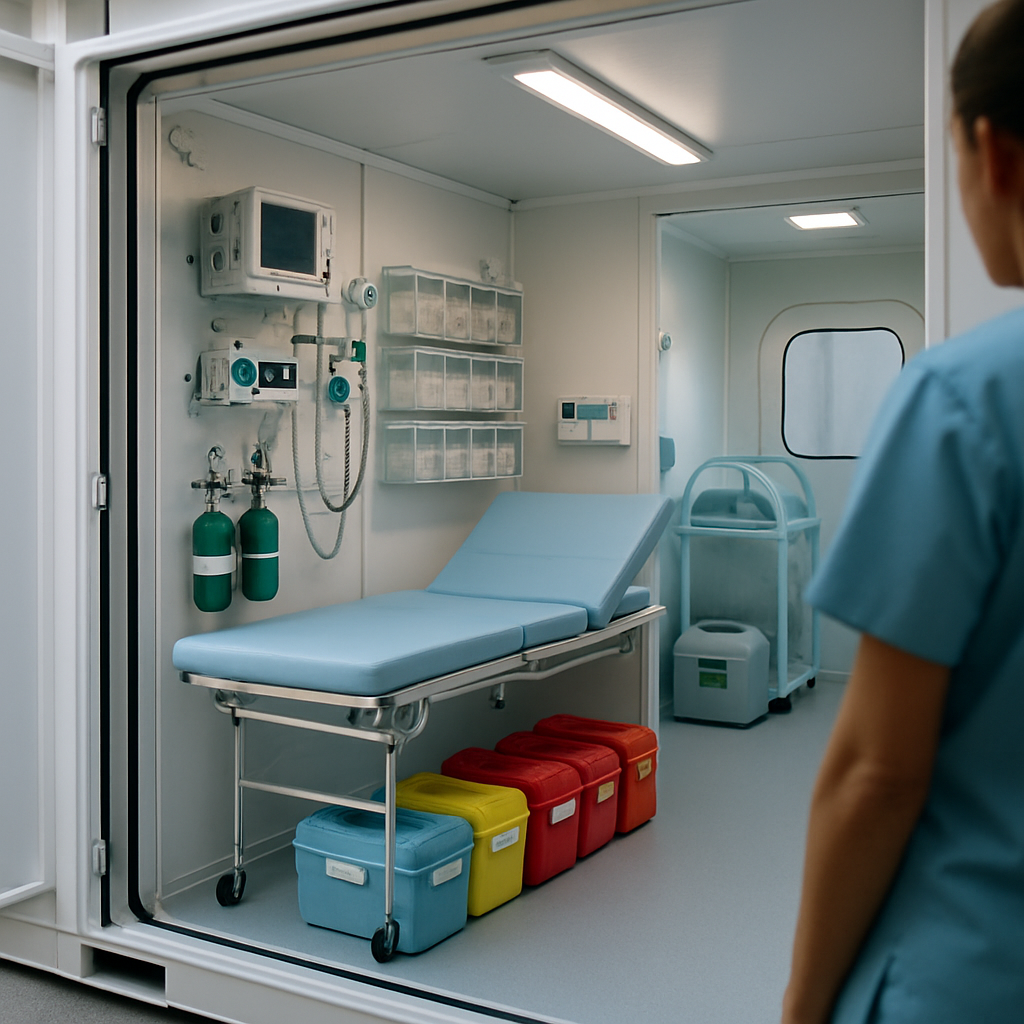
For organizations comparing companies experienced in designing custom ambulances and specialty healthcare vehicles for emergency response, the key question is not simply which vehicle is available. It is how well the vehicle can be configured around a specific mission, healthcare workflow, local road conditions, regulatory requirements, and deployment model. EOW Global approaches this field through vehicle conversion and customization, creating solutions for customers operating across different regions and service environments.
Designing Specialty Healthcare Vehicles Around the Mission
A specialty healthcare vehicle begins with its intended use. An urban emergency ambulance may require a compact footprint, rapid access to equipment, and an interior arranged for short response cycles. A vehicle supporting remote communities may need additional storage, climate control, power management, and a layout suitable for longer periods away from a fixed facility. A mobile clinic may prioritize consultation rooms, examination areas, privacy, and patient flow rather than intensive emergency transport.
This mission-led approach influences every major design decision. The base vehicle, roof height, interior volume, door configuration, floor system, seating, lighting, medical cabinetry, stretcher arrangement, oxygen storage, electrical architecture, and ventilation strategy all need to work together. A vehicle can look highly equipped while still being difficult to operate if equipment access, staff movement, or cleaning routines have not been considered from the beginning.
Custom ambulance design is therefore a coordination process between the vehicle platform and the medical team that will use it. A hospital may need a configuration aligned with its emergency department procedures. A government agency may require a standardized fleet that can be serviced in multiple locations. An NGO may prefer a robust, repeatable layout that can be deployed in several countries with only limited local adaptation.
EOW Global’s Mercedes Sprinter emergency ambulance is an example of how a widely used commercial platform can be developed into a purpose-oriented emergency response vehicle. The Sprinter format provides a practical foundation for organizations seeking interior volume, road mobility, and a configuration that can be adapted to operational requirements. The final specification can be discussed around the intended crew, equipment list, patient transport model, and deployment conditions.
Key design elements in a custom configuration
Interior zoning is one of the most important considerations. Clear separation between the patient area, crew seating, equipment storage, and entry points helps create a more predictable working environment. Cabinets and drawers can be positioned according to frequency of use, while secure mounting systems help keep medical equipment organized during movement. The choice of materials also affects cleaning routines, durability, and long-term fleet maintenance.
Lighting requires equal attention. General interior illumination can be combined with focused task lighting, allowing crews to access equipment or work in the patient compartment at different times of day. Electrical systems may be configured around auxiliary batteries, shore power, inverters, inverter chargers, external connections, and monitoring panels. The right arrangement depends on the equipment load and the way the vehicle will be parked, dispatched, and serviced.
From Emergency Ambulances to Mobile Healthcare Platforms
Specialty healthcare vehicles cover a broad range of applications. Emergency ambulances are often the most visible example, but the same design expertise can support mobile consultation units, screening vehicles, blood donation vehicles, dental clinics, vaccination units, rehabilitation vehicles, command and coordination vans, and temporary healthcare facilities. Each platform has a different workflow, so a solution that works for patient transport may not be appropriate for a mobile diagnostic service.
Consider a regional health authority deploying five mobile clinic vehicles to communities located several hours from the nearest hospital. Each vehicle may need two consultation areas, a compact reception zone, lockable medical storage, a waiting arrangement, a handwashing point, climate control, and a power system that can support equipment during field operations. If the vehicles rotate between locations, the interior should also be designed for quick restocking and straightforward maintenance.
By contrast, an emergency ambulance operating in a dense city may need a different balance. A shorter wheelbase can help with maneuverability, while the interior may prioritize rapid access to frequently used equipment, stretcher handling, crew seating, and communication systems. The vehicle may return to base several times per day, so replenishment and cleaning access become central to the operating model.
This example shows why a vehicle specification should be built around actual scenarios rather than a generic equipment catalogue. Questions about daily call volume, crew size, patient transfer methods, average travel time, climate, road quality, service availability, and storage requirements can materially change the design. A fleet intended for six-hour deployments in a hot, remote region will place different demands on the vehicle than a fleet used for short urban transfers.
International customers may also require local adaptation. Road regulations, vehicle registration categories, electrical standards, language requirements, emergency lighting rules, and available maintenance infrastructure vary by market. A conversion partner with experience in international projects can help coordinate these variables during specification and production, reducing the risk of discovering major compatibility issues late in the process.
Planning the vehicle around real workflows
A useful planning method is to map the vehicle’s first ten minutes of operation. Who enters first? Where is the stretcher positioned? Which equipment is needed immediately? Can the crew reach essential supplies without obstructing patient movement? Where are used materials placed? How does the vehicle return to service after a call?
These practical questions often reveal more than a list of optional features. For example, relocating a frequently used storage module by a short distance may reduce unnecessary movement throughout a shift. A wider access route may simplify patient transfer. A dedicated charging location may make equipment preparation more consistent between missions. The value comes from connecting design decisions to routine use.
Manufacturing, Customization, and Fleet Deployment
Design is only one part of a specialty vehicle project. The production process must translate the approved concept into a repeatable, serviceable, and documented vehicle. This includes base vehicle preparation, interior construction, electrical integration, medical equipment mounting, exterior markings, testing, inspection, and delivery documentation. For institutions purchasing more than one unit, consistency across the fleet is especially important.
Customization can range from a relatively focused conversion to a comprehensive build. A focused conversion may involve emergency lighting, warning systems, interior fittings, stretcher equipment, seating, and storage. A more extensive project can include complete interior zoning, climate control, auxiliary power, communication infrastructure, privacy systems, specialist equipment integration, and a custom exterior identity.
Project coordination should begin with a clear technical brief. This brief may include the number of crew members, patient capacity, equipment dimensions and weights, preferred manufacturers, electrical requirements, operating temperatures, expected annual mileage, and delivery destinations. It should also identify which elements are mandatory, which are preferred, and which may be added in a later phase.
Weight distribution deserves particular attention. Medical equipment, batteries, cabinetry, stretchers, oxygen cylinders, and crew seating all contribute to the final vehicle mass. Their positions can affect access, balance, payload, and driving characteristics. A well-prepared specification considers not only what fits inside the vehicle but also how the complete loaded configuration will be used on the road.
Maintenance planning is equally relevant for international operators. A vehicle may spend most of its working life far from the company that converted it. Replaceable components, accessible service points, clear documentation, and commonly available parts can simplify ownership. Training materials and handover support can also help local teams understand the vehicle’s systems and daily checks.
Organizations evaluating potential suppliers may wish to review production capabilities, previous vehicle categories, customization depth, project communication, export experience, and the clarity of the technical approval process. A strong project discussion should make it easier to understand what is included in the base specification, what is optional, how changes are managed, and which documentation accompanies delivery.
For global emergency response, the vehicle is part of a wider system. It must work with dispatch procedures, hospital intake, communications, supply chains, maintenance teams, and local authorities. Guidance from international public health organizations, including the World Health Organization’s emergency-related resources, can provide broader context for organizations planning response capacity, while the vehicle itself must be configured according to the operational realities of the purchasing organization.
What Makes a Vehicle Suitable for International Use?
International deployment involves more than shipping a finished vehicle. Customers may need support with destination requirements, documentation, language-specific markings, regional electrical compatibility, climate considerations, and delivery scheduling. In some markets, the vehicle may operate on rough roads, in high temperatures, or in locations where specialized servicing is limited. These conditions should be reflected in the specification before production begins.
Climate control, insulation, corrosion protection, glazing, flooring, and interior materials can all influence the suitability of a vehicle for a particular region. A vehicle used in a hot climate may require careful attention to cooling performance and equipment storage conditions. A vehicle serving a cold-weather region may need different insulation and heating considerations. The appropriate choices depend on the destination, operating hours, and equipment carried.
Branding and fleet identity can also be part of the project. Exterior graphics, color schemes, reflective markings, organization logos, and emergency identifiers can help align vehicles with a public authority, hospital network, NGO, or private healthcare provider. Interior finishes can be selected to create a consistent identity across multiple vehicle types while preserving practical service access.
Scalability is another consideration. Some customers begin with one prototype vehicle, evaluate it in service, and then order a larger fleet. Others need several units from the outset. A modular design approach can make it easier to repeat a proven layout or adapt it for a different mission. For example, a basic mobile medical platform may later be developed into a maternal health unit, diagnostic vehicle, or emergency support vehicle without starting the entire design process again.
EOW Global works with the understanding that specialty healthcare vehicles must be specified around the customer’s use case, not selected as a one-size-fits-all product. The most productive starting point is a detailed conversation about the mission: where the vehicle will operate, who will use it, what it must carry, how often it will move, and what level of customization the project requires.
Frequently Asked Questions
What are specialty healthcare vehicles used for?
They are used to deliver healthcare services, patient transport, emergency response, mobile consultations, diagnostics, vaccination programs, blood collection, rehabilitation, and humanitarian medical support outside conventional facilities. The layout and equipment depend on the vehicle’s specific mission.
Can an ambulance or mobile clinic be customized for a specific country?
Yes. Customization may address vehicle dimensions, interior layout, electrical requirements, climate, markings, equipment integration, documentation, and local operating conditions. These details should be defined during the technical planning stage.
How should an organization begin planning a custom healthcare vehicle?
Start with a written mission profile. Include the intended location, crew size, patient workflow, equipment list, operating hours, road conditions, climate, expected fleet size, and delivery requirements. This gives the conversion team a practical basis for developing the vehicle specification.
Specialty healthcare vehicles are most effective when their design reflects the work they are expected to perform. For hospitals, public institutions, NGOs, and emergency organizations, the right platform can combine mobility, organized clinical space, equipment access, and a configuration prepared for local conditions. EOW Global supports this process by bringing together vehicle conversion, interior customization, and project-focused planning for customers operating in different markets. The starting point is not a standard feature list; it is a clear understanding of the people, places, and healthcare missions the vehicle will serve.