
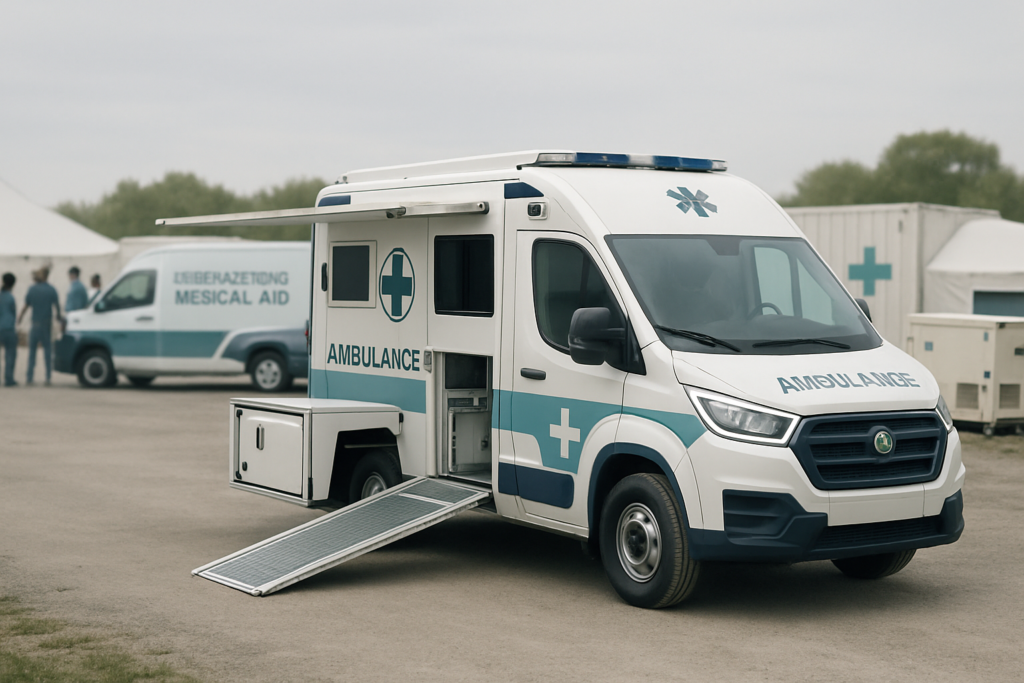
International healthcare projects rarely operate under standard conditions. A vehicle may need to support emergency response in a remote district, provide scheduled patient transport between facilities, or function as a mobile treatment unit during a humanitarian deployment. In each case, the ambulance or medical vehicle must match the operational environment, clinical workflow, local regulations, infrastructure and procurement plan. That is why special-purpose ambulances require more than a conventional vehicle conversion.
Hospitals, public authorities, NGOs, emergency organizations and international healthcare investors often need a partner that can translate a project brief into a practical, serviceable and scalable vehicle solution. The right partner brings together vehicle engineering, medical interior planning, electrical systems, equipment integration, documentation and after-sales coordination. EOW Global approaches these projects as complete mobility solutions, helping international customers evaluate the right vehicle type, configuration and deployment model before production begins.
This guide explains the main considerations behind special-purpose ambulances for international projects. It focuses on vehicle purpose, customization, technical integration, field usability and project coordination so that procurement teams can compare solutions through an operational lens rather than looking only at the vehicle exterior or equipment list.
Designing the Vehicle Around the Mission
The first question in an international ambulance project is not “Which ambulance model should we buy?” It is “What must this vehicle do every day?” A rapid-response ambulance serving an urban hospital has different requirements from a mobile clinic working across rural communities. Similarly, a critical care transport vehicle needs a different interior arrangement from a non-emergency medical transport vehicle used for scheduled transfers.
At EOW Global, we begin with the mission profile. This profile can include the expected patient category, crew size, transport distance, road conditions, climate, availability of local service support, equipment requirements and planned operating hours. It can also include less visible details, such as whether the crew needs to move around the patient compartment during transit, whether the vehicle will remain stationary for long periods, or whether it must connect to an external power source at a temporary field base.
Emergency and response ambulances
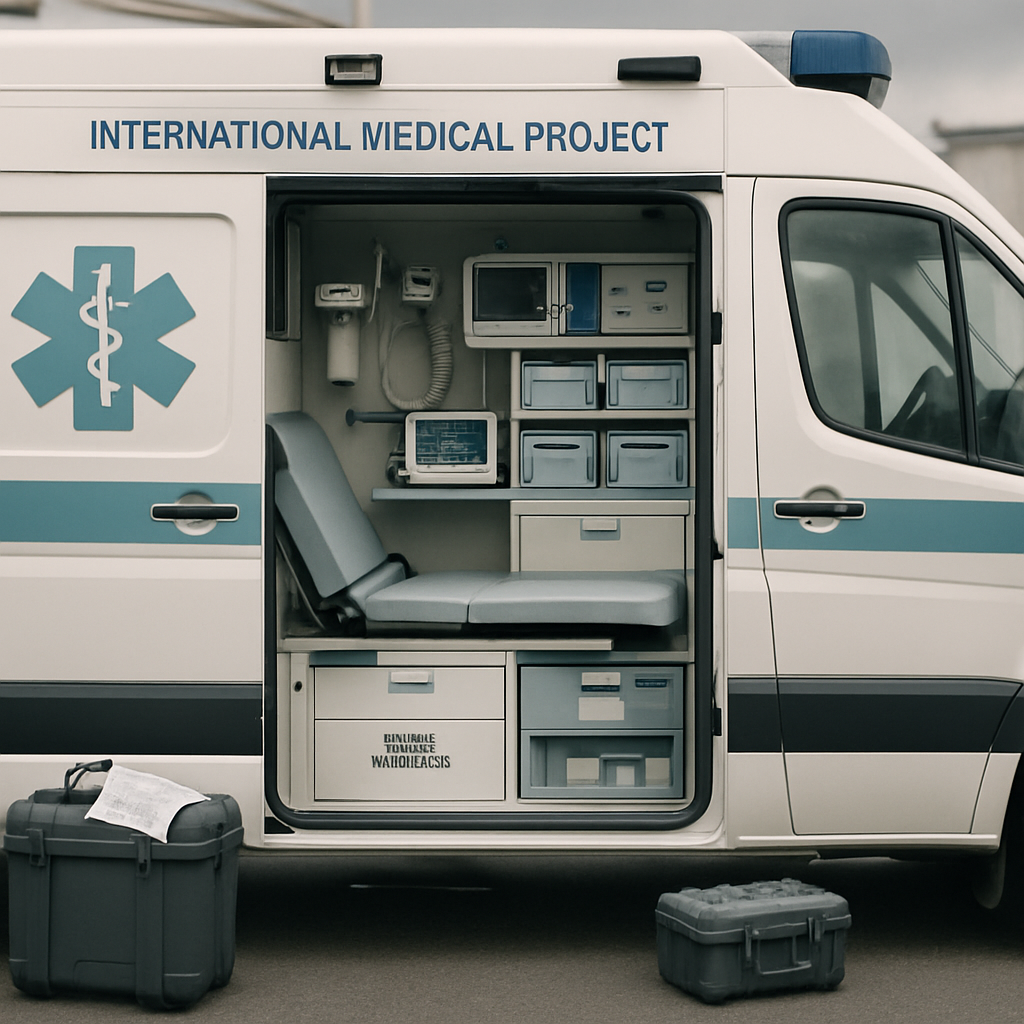
Emergency ambulances usually prioritize rapid access, clear crew movement and the organized placement of essential equipment. Interior planning can include stretcher systems, medical seating, overhead cabinets, oxygen storage, suction equipment, monitoring devices, work surfaces and dedicated electrical outlets. The exact configuration depends on the intended response model and on the equipment that the customer already owns or plans to procure.
For international projects, the base vehicle also matters. A compact ambulance may suit dense city streets and hospital-to-hospital transfers, while a larger van or truck-based ambulance may offer additional working space for longer journeys or more complex equipment. In regions with uneven roads, dust, high temperatures or limited workshop access, the project team may also consider ground clearance, thermal management, battery capacity, serviceability and the availability of replacement parts.
Non-emergency and scheduled medical transport
Non-emergency medical transport vehicles support planned transfers, outpatient appointments, rehabilitation journeys and inter-facility movement. These vehicles may require easier boarding, wheelchair access, flexible seating and a calmer interior layout. Depending on the brief, a vehicle can accommodate one stretcher, several seated passengers or a combination of wheelchair and passenger positions.
The difference between emergency ambulance services and scheduled medical transport is not simply a matter of vehicle markings. It affects the interior, equipment package, staffing model, loading process and operational cost. A procurement team that defines these points early can avoid paying for features that do not support the actual service while ensuring that the vehicle includes the functions its crews use every day.
Critical care and special operations vehicles
Critical care transport requires careful integration of life-support equipment, power distribution, oxygen systems, monitoring devices and crew access. The vehicle must provide an organized working environment around the patient, with enough space for the equipment selected by the medical team. Cable routing, mounting points and storage locations deserve the same attention as the visible interior finishes because they affect setup time and daily usability.
Other special-purpose vehicles may serve vaccination programs, diagnostic screening, dialysis support, dental care, maternal health outreach, blood collection, rehabilitation or disaster response. These vehicles may operate as mobile clinics rather than traditional ambulances. Their layouts can include consultation areas, examination spaces, medical storage, refrigeration, generators, solar support or external awnings, depending on the deployment plan.
Customization, Equipment Integration and Field Usability
Customization becomes valuable when it solves a defined operational need. A well-designed medical vehicle does not add equipment randomly. Instead, it places each component according to workflow: where the crew reaches first, where supplies remain secure, how the stretcher enters, how staff clean surfaces, and how the vehicle connects to power at the destination.
EOW Global can coordinate a project around the customer’s selected base vehicle, equipment list and regional requirements. The work may include interior construction, medical furniture, electrical installation, lighting, air-conditioning, oxygen infrastructure, communication provisions, exterior graphics and storage systems. The customer can also define the level of customization, from a practical standard layout to a fully engineered mobile healthcare unit.
Interior layout and crew movement
The interior should support a predictable sequence of actions. For example, a response crew may need to open the rear doors, secure the stretcher, access monitoring equipment, reach oxygen supplies and prepare the patient compartment within a short period. When cabinets, seats and devices follow a logical arrangement, the team can spend less time searching for equipment and more time following its established procedure.
Small design decisions have a visible effect on daily work. Rounded furniture edges can simplify cleaning. Lockable drawers can keep supplies in place on uneven roads. Clearly assigned storage zones can help crews identify missing items during vehicle checks. Durable wall and floor materials can support repeated cleaning cycles and reduce the need for frequent interior replacement.
Power, oxygen and communications
Medical equipment increasingly depends on reliable electrical planning. A project may require inverter systems, auxiliary batteries, shore power, external connection points, USB outlets, dedicated equipment circuits or power monitoring. The design team must consider both the normal load and the potential peak load created when several devices operate at the same time.
Oxygen storage also requires careful planning. Cylinder capacity, restraint systems, access, ventilation and refilling arrangements vary from one project to another. The same applies to communication equipment. A vehicle serving a national ambulance network may need radio integration, while a mobile clinic working in remote areas may rely on satellite communication or a separate field communications package.
Climate and terrain considerations
International projects often cross climate zones and infrastructure conditions. A vehicle intended for hot and dusty environments may require stronger air-conditioning performance, protected ventilation paths and materials selected for frequent cleaning. In colder regions, insulation and heating become more important. A mobile clinic deployed in a humid coastal area may need a different approach to material selection and equipment storage than a vehicle operating in a dry inland region.
Terrain also influences the base vehicle and conversion. A city ambulance may focus on maneuverability and parking dimensions, while a rural response vehicle may require a more robust chassis, additional underbody protection or a four-wheel-drive platform. These decisions should come from the route profile and service plan rather than from a generic “heavy-duty” specification.
Consider a public health program that plans to serve 12 rural communities with two mobile clinics. Each vehicle may travel 180 kilometers on a service day, remain on site for six hours and carry two staff members, diagnostic equipment, consumables and a portable power system. In this scenario, storage volume, crew seating, auxiliary power, climate control and maintenance planning may matter more than a high-capacity emergency equipment package. A clear operational brief helps the manufacturer allocate the budget to the features that directly support the program.
Hygiene and long-duration field operations
Ambulances and mobile medical areas may operate for extended periods between base visits. Their design can support routine cleaning through smooth surfaces, sealed joints, removable components and accessible storage. Project teams may also establish a cleaning and disinfection protocol that reflects the vehicle’s materials, equipment and field conditions.
For teams researching options related to field disinfection during long-duration international operations, the subject should remain connected to the broader vehicle plan. Surface care is only one part of operational readiness; teams also need appropriate storage, ventilation, water access, waste handling, staff procedures and a clear separation between clean and used supplies. Integrating these considerations during the design stage can make the medical area easier to maintain throughout a deployment.
International Project Delivery, Compliance and Support
A special-purpose ambulance project does not end when the vehicle leaves the production facility. International customers also need documentation, shipping coordination, training, spare-part planning and a clear handover process. These elements help the receiving organization place the vehicle into service with fewer unanswered questions.
Documentation and procurement clarity
Public tenders and international healthcare programs often involve several stakeholders. A hospital may define the clinical requirements, a government agency may manage procurement, an NGO may operate the vehicle and a logistics partner may handle importation. For that reason, the technical offer should describe the vehicle in a clear and traceable way.
Useful project documentation can include technical specifications, floor plans, equipment schedules, electrical diagrams, component information, maintenance recommendations, user manuals and acceptance criteria. The exact documentation package depends on the contract and destination, but clarity remains essential. When every party works from the same configuration, the customer can review the project before production and reduce the risk of late changes.
Regulatory and destination requirements
Ambulance regulations and vehicle registration requirements vary between countries. The customer may need to confirm rules concerning vehicle dimensions, emergency lighting, warning systems, seating, stretcher anchoring, oxygen storage, electrical systems, import documentation and medical equipment registration. A manufacturer can support the technical preparation, while the customer and local authorities remain responsible for confirming the requirements that apply in the destination country.
International projects may also involve different vehicle brands, left-hand or right-hand traffic, metric or non-metric documentation, and local expectations for service intervals. Addressing these details early helps the project team select a platform that local technicians can maintain and that the end users can operate comfortably.
Training, handover and after-sales coordination
Even a well-designed vehicle needs a structured handover. Operators benefit from training on storage systems, patient loading, auxiliary power, oxygen arrangements, cleaning-compatible materials and basic daily checks. Maintenance teams may need separate information about electrical systems, climate control, furniture fittings and replacement components.
For a fleet order, the handover can include standardized labeling, configuration records and a replacement-parts list for each vehicle. A project manager may also define a communication channel for technical questions during the initial operating period. These steps are especially useful when the customer deploys vehicles across multiple regions rather than keeping the entire fleet at one hospital.
EOW Global supports customers that need more than a single converted vehicle. A project can include a small pilot unit, a repeatable fleet configuration or a phased deployment in which the design evolves after field feedback. The first vehicle can help validate crew movement, equipment placement and storage capacity before the organization orders additional units. This approach gives the customer a practical way to connect design decisions with real operating conditions.
Organizations evaluating previous mobile healthcare and medical vehicle work can review the EOW Global reference projects to see how different operational requirements translate into vehicle configurations. The examples can help procurement teams prepare more specific questions about vehicle type, interior layout, equipment integration and project scope.
Frequently Asked Questions
What are the four types of ambulances?
People commonly refer to four broad categories: emergency ambulances, non-emergency medical transport vehicles, critical care transport ambulances and special-purpose medical vehicles. The exact classification changes by country and authority. A special-purpose vehicle may include a mobile clinic, disaster-response unit, bariatric ambulance or another configuration built around a defined operational mission.
What is a Type 3 ambulance?
A Type 3 ambulance generally uses a cutaway van chassis with a modular patient compartment attached behind the cab. This arrangement can provide more interior room than a standard van while maintaining a familiar commercial vehicle platform. Definitions and specifications vary by jurisdiction, so the customer should confirm the applicable local standard before procurement.
What is a pink ambulance?
A pink ambulance usually refers to a vehicle finished in pink or carrying pink campaign graphics. Organizations may use this color for awareness programs, fundraising initiatives or community outreach. The color itself does not define the vehicle’s medical function; the interior layout, equipment and operating purpose determine whether it serves as an emergency ambulance, transport vehicle or mobile healthcare unit.
Questions such as “What is the ambulance number?”, “What does ambulance mean?” and “What are the 4 types of ambulance?” often appear in general searches, but international procurement requires more specific information. The key details are the intended mission, destination requirements, patient and crew workflow, equipment list, service conditions and support model.
Choosing a Partner for an International Medical Vehicle Project
The best-suited company for a special-purpose ambulance project is not defined by one vehicle photo or a long feature list. Hospitals, government institutions, NGOs and emergency organizations usually need a partner that can understand the service model, turn it into a technical specification and coordinate the details through delivery.
Start with the mission: emergency response, planned transport, critical care, mobile diagnostics, vaccination, disaster relief or another field service. Then define the environment, equipment, crew workflow, expected mileage, climate, maintenance network and deployment schedule. With this information in place, EOW Global can help shape a vehicle solution that connects practical design with international project requirements.
A special-purpose ambulance becomes genuinely useful when every major component supports the work taking place inside and around it. That means selecting the right base vehicle, planning the medical interior carefully, integrating systems with future maintenance in mind and preparing the documentation needed for a smooth handover. For international healthcare projects, this coordinated approach turns a vehicle order into a deployable medical service asset.