
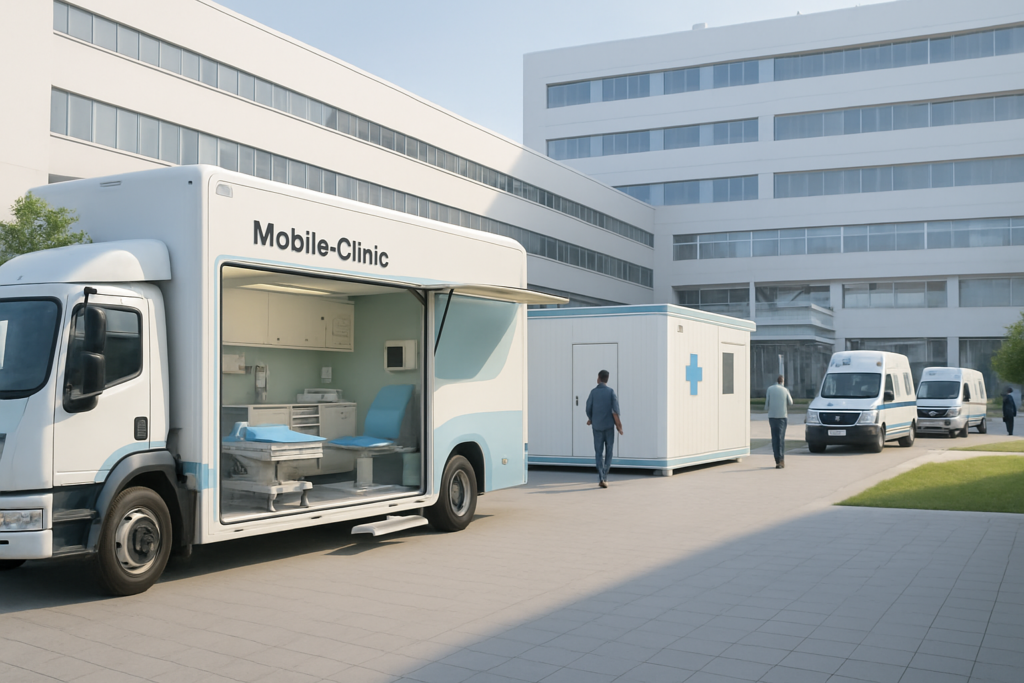
Hospitals, humanitarian organizations, public institutions and emergency response teams often need healthcare spaces that can be deployed beyond a permanent facility. Choosing the right mobile clinic manufacturers therefore involves more than selecting a vehicle: the project must address clinical workflow, equipment integration, logistics, branding, local operating conditions and future expansion.
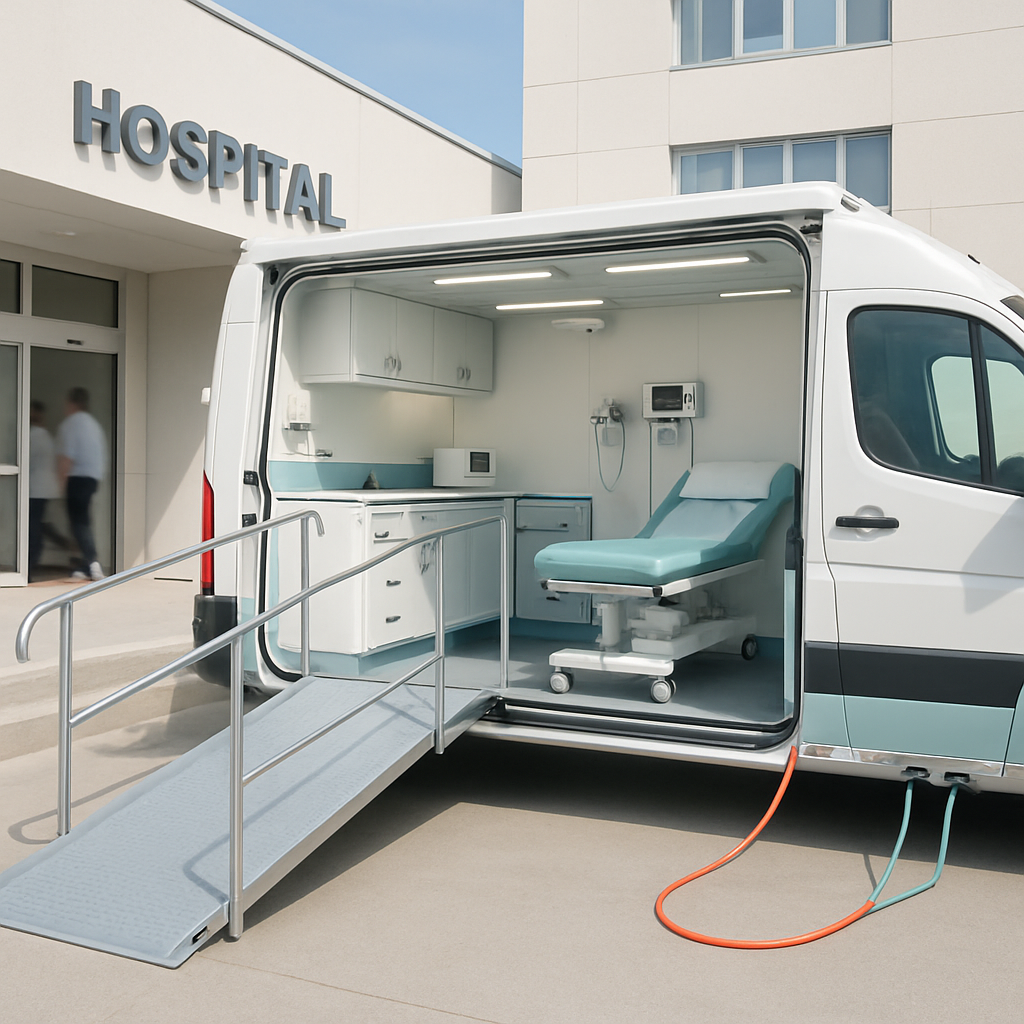
EOW Global develops mobile healthcare solutions for international projects, including hospital extensions, outreach programs, screening services and field operations. This overview explains what to assess when comparing manufacturers and how a customizable mobile clinic can support a practical, scalable healthcare plan. For broader context, project teams may also review the principles of primary health care when defining service priorities and community access goals.
What to Look for in Mobile Clinic Manufacturers
A capable manufacturer should be able to translate a healthcare requirement into a complete mobile environment. That process typically begins with the intended service: primary care consultations, diagnostic screening, vaccination programs, dental care, mammography, laboratory services or emergency support may each require a different interior layout and equipment package.
Customization is central to this type of project. The vehicle platform, number of examination rooms, storage capacity, patient flow, staff areas, power systems, ventilation, lighting and accessibility features can be planned around the operating model. A clinic designed for scheduled hospital outreach may prioritize comfortable consultation rooms and registration space, while a humanitarian unit may require rapid deployment, robust storage and flexible treatment areas.
EOW Global works with project-specific requirements rather than offering a single fixed configuration. Its mobile clinic manufacturing solutions can be developed for different vehicle formats, medical functions and regional operating conditions, giving hospitals and organizations a clearer route from initial concept to a deployable unit.
Designing a Mobile Clinic Around Real Hospital Workflows
Functionality depends on how people and equipment move through the unit. A well-planned layout can separate patient entry and exit points, organize staff circulation, position equipment where it is needed and provide dedicated areas for documentation, storage and technical systems. These details become especially important when the vehicle will serve multiple locations in a single day.
For example, a regional hospital planning a two-vehicle outreach program might assign one unit to general consultations and the second to diagnostic screening. The first could include two consultation rooms, a compact reception area and secure medical storage; the second could be configured around specialized imaging equipment, operator space, patient changing facilities and controlled equipment access. Both units would still need coordinated power, climate-control, communications and maintenance planning.
This project-based approach helps connect the mobile unit with the hospital’s existing procedures. It also makes it easier to define responsibilities for transport, site preparation, staff deployment, equipment servicing and data handling before the vehicles enter operation. For specialized screening programs, EOW Global’s mobile mammography clinic truck is an example of how the interior and technical design can be organized around a specific clinical service.
Global Deployment, Manufacturing Support and Project Coordination
International mobile clinic projects often involve several parties: the healthcare provider, government or NGO partners, vehicle operators, equipment suppliers and local service teams. The manufacturer’s role can extend beyond the vehicle body to include design coordination, equipment integration, documentation and communication throughout the project.
Regional conditions should be considered from the beginning. Road quality, climate, electrical infrastructure, fuel availability, security requirements, storage needs and local service capacity can all influence the final specification. A unit intended for remote communities may require a different power and storage strategy from one used in urban hospital parking areas.
EOW Global supports a range of mobile healthcare concepts for customers operating across different markets. A clear technical brief, defined service scope and early review of local requirements help create a more efficient path toward production and delivery. Depending on the project, the scope may include vehicle selection, interior construction, medical equipment placement, exterior branding, staff areas and handover documentation.
Frequently Asked Questions
What services can mobile clinic manufacturers provide?
Manufacturers may design and build units for consultations, diagnostics, screening, dental care, laboratory services, vaccination programs and emergency response. The final scope depends on the intended service, vehicle platform and equipment requirements.
Can a mobile clinic be customized for a hospital project?
Yes. A project can be planned around room layout, patient flow, storage, power systems, accessibility, staff workflow, medical equipment and exterior identity. Customization is usually defined during the technical design stage.
How should an international organization begin a mobile clinic project?
Start by defining the healthcare service, target locations, expected patient volume, operating schedule, equipment list and local infrastructure. Sharing this information with a manufacturer allows the vehicle, interior and support requirements to be evaluated as one integrated project.
The right mobile clinic is not simply a vehicle with medical equipment inside. It is a coordinated healthcare workspace shaped around service delivery, staff movement, patient access and the realities of each deployment area. With its customizable approach and experience in mobile healthcare solutions, EOW Global provides a practical starting point for hospitals, public institutions, NGOs and emergency organizations planning their next mobile care project.